Baylor College of Medicine
Children’s Foundation - Uganda
Children’s Foundation - Uganda
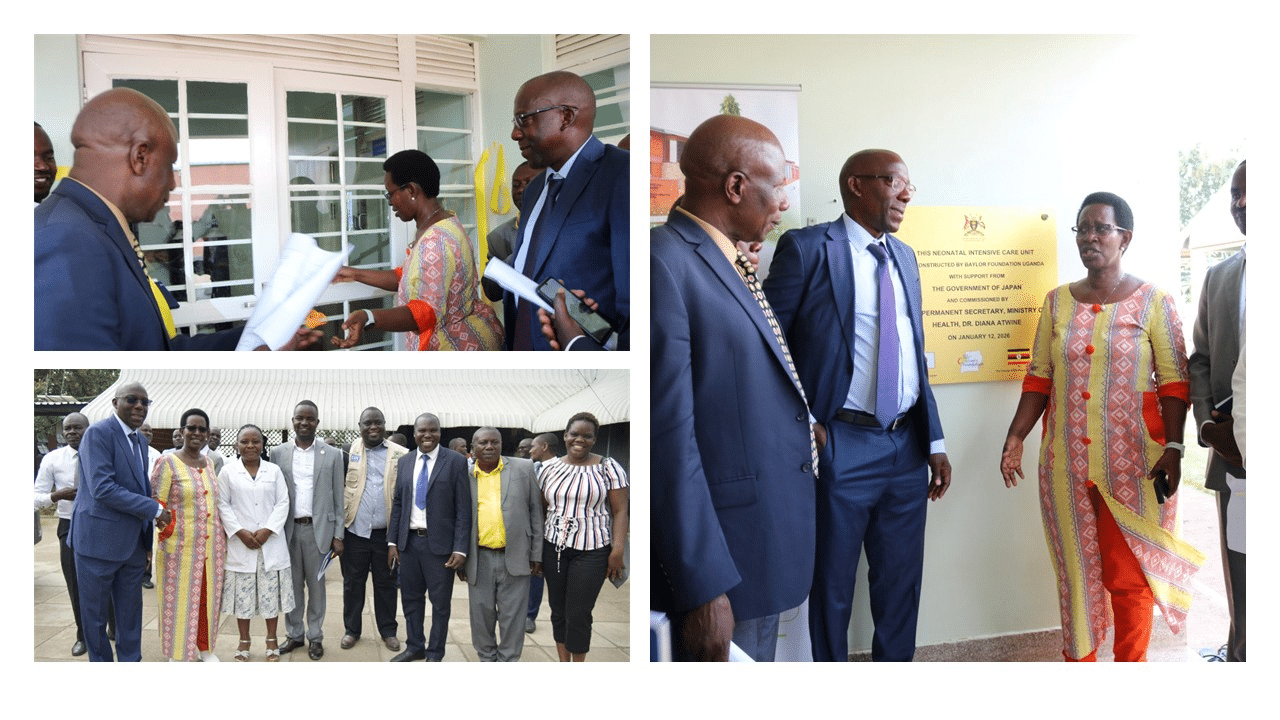
In line with national priorities to reduce maternal and newborn mortality, an upgraded Neonatal Intensive Care Unit (NICU) and Mothers’ Dormitory at Bwera General Hospital have been successfully commissioned, significantly expanding the hospital’s capacity to provide specialised newborn care across the district.
This intervention was supported by the Ministry of Health, Government of Japan, UNICEF, and ELMA Foundation, and implemented through Baylor Foundation Uganda, in close collaboration with the Ministry of Health and Kasese district leadership, who put up the mother’s dormitory.
Before the intervention, the hospital operated a two-bed NICU with limited capacity to manage high-risk and premature newborns. Following refurbishment, equipment installation, and health worker skilling, the unit now accommodates over 15 beds with full neonatal intensive care support. This expansion is expected to improve newborn survival rates, reduce referrals, and enhance the quality of care in the region.
While commissioning the facility, the Permanent Secretary for Health, Dr Diana Atwiine, reaffirmed the government’s appreciation for the partnership model.
“Thank you, Baylor Foundation Uganda and your partners for demonstrating how coordinated partnerships can strengthen the public health system and directly improve outcomes for mothers and newborns,” she noted.
Baylor Foundation Uganda’s Executive Director, Dr Dithan Kiragga, emphasised the life-saving impact of the intervention.
“By transforming this NICU into a fully functional unit, our partners have helped ensure that the most vulnerable newborns receive timely, quality care close to their communities,” he said.
The Bwera Hospital Board Chair highlighted the sustainability benefits of the investment, noting improved staff morale, better referral management, and increased community trust in the facility.
The commissioning ceremony was attended by senior Ministry of Health officials, including Dr Richard Mugahi (Commissioner in charge of Reproductive and Infant Health), district leadership, hospital management, and implementing partners. The upgraded facilities stand as a model of effective donor-government collaboration in advancing maternal and newborn health outcomes in Uganda.