
Baylor College of Medicine
Children’s Foundation - Uganda
Children’s Foundation - Uganda
Baylor Foundation Uganda is proud to be part of this transformative journey, led by our key partner, Texas Children’s Global HOPE.
Today, Dr. Dithan Kiragga, Executive Director of Baylor Foundation Uganda, and Dr. Denise Birungi, Director of Medical Programmes, joined the Vice Chancellor of Makerere University, Prof. Barnabas Nawangwe, for a landmark occasion. The event was held at the Makerere University Main Hall and brought together key partners, including the Makerere University College of Health Sciences, Mulago National Referral Hospital, the Joint Clinical Research Center and Texas Children’s Global HOPE (Global Hematology Oncology Pediatric Excellence) team led by Dr. Joseph Lubega.
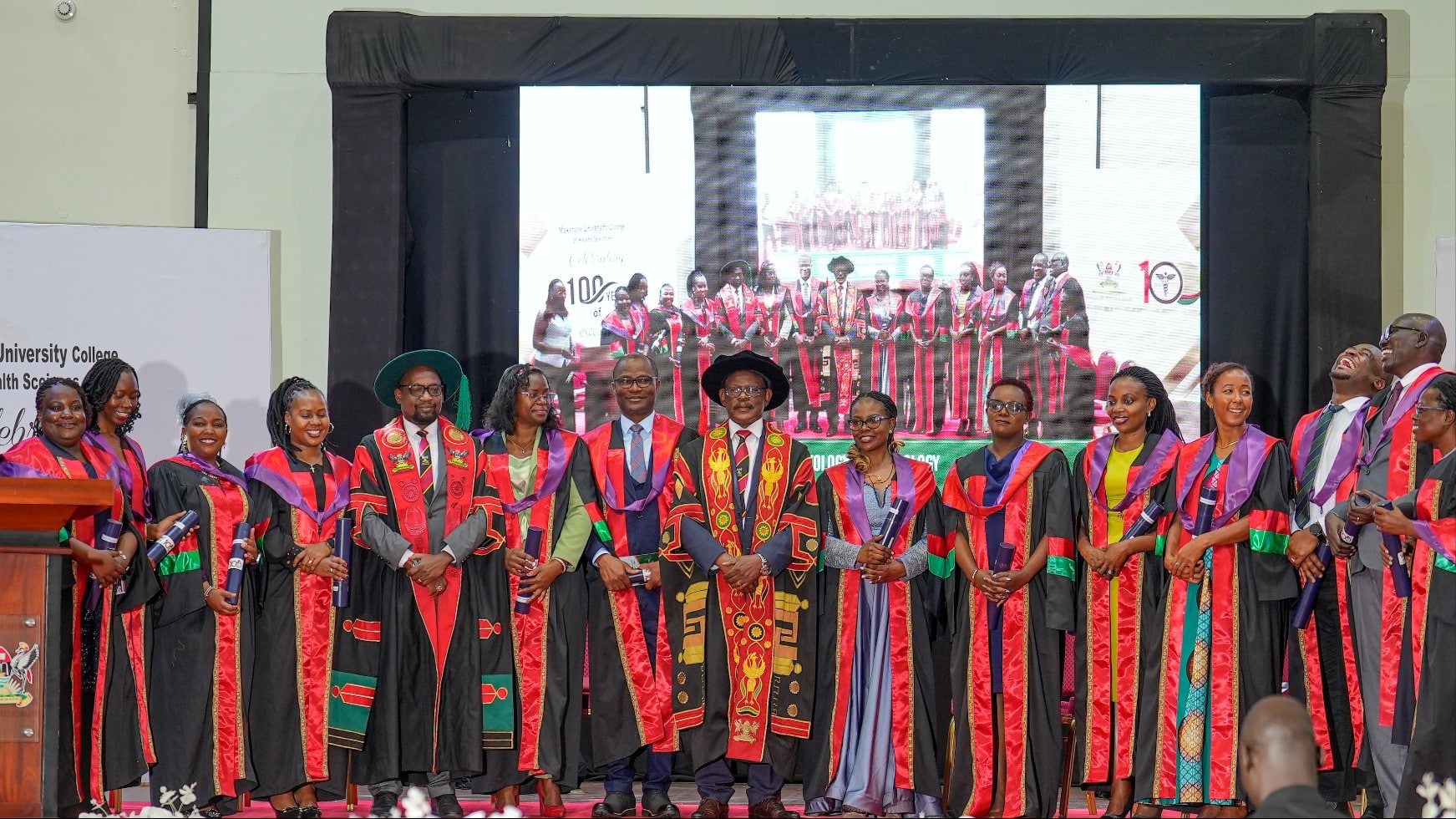
Also in attendance were representatives from development partners namely: Sky High Foundation, The ELMA Philanthropies, Lions Clubs International, and the Bristol Myers Squibb Foundation. Together, they witnessed the graduation of 16 Pediatric Hematology and Oncology fellows from Uganda, Kenya, Tanzania, Malawi, Nigeria, South Sudan, and the Democratic Republic of Congo.
Cancer is a major and growing public health concern, with thousands of children and adults affected annually. In Uganda alone, around 7,000 children and adults are affected annually and less than 50% receive timely treatment. Uganda also ranks among the top five countries globally with the highest burden of sickle cell disease and it is estimated that around 20,000 babies are born with it, every year.
To address these challenges, the Pediatric Hematology and Oncology Fellowship was established to build a critical mass of super-specialists capable of delivering lifesaving care to children with cancer and blood disorders across the region. The Vice Chancellor underscored the importance of such Africa-led training initiatives in tackling the continent’s burden of both communicable and non-communicable diseases. He applauded the collective efforts of partners who made the fellowship program possible.
The Executive Director of Mulago National Referral Hospital (NRH), Dr. Rosemary Byanyima in her remarks, noted how she was happy to have a program of this nature that improves clinical outcomes. Mulago NRH is the largest children’s cancer and blood diseases center in Africa—and one of the largest in the world. Each year, it treats about 400 new pediatric cancer patients and thousands with sickle cell disease. The center now has nine specialists, including the only pediatric neuro-oncologist in the region.
Dr. Joseph Lubega of the Texas Global Health Program shared a deeply personal reflection. In 1999, he met a vibrant eight-year-old girl named Victoria. She died from cancer after being denied a chance at treatment—an experience that moved him to action. Her story became the spark that led to the creation of a specialist training program now impacting numerous children across the region.
Mr. Richard Mugahi, Commissioner for Maternal, Newborn, Child, and Reproductive Health, represented the Permanent Secretary of the Ministry of Health. He applauded the partnership with Makerere University and reaffirmed the Ministry’s commitment to childhood cancer care. He also highlighted the government’s ongoing investment in regional cancer centers—already operational in Gulu and soon to be launched in Arua, Mbarara, and Mbale.
“We are proud to be part of this partnership with the Texas Global Health Program,” said Dr. Dithan Kiragga, Executive Director of Baylor Foundation Uganda. “Every fellow graduating today is already making a life-saving difference for children living with cancer and blood disorders across the country and the region.”
Baylor College of Medicine Children’s Foundation–Uganda is a valued member of the Texas Children’s Global Health Network, a collaborative initiative established in 1999 by the Baylor International Pediatric AIDS Initiative (BIPAI). The Network was created to enhance pediatric and family HIV care, treatment, and health professional training.
BIPAI’s efforts in Uganda were supported by Baylor College of Medicine, Texas Children’s Hospital, the Bristol-Myers Squibb Foundation, Mulago Hospital, and the Republic of Uganda. As a result, Baylor College of Medicine Children’s Foundation–Uganda was established and later registered as a local non-governmental organization in 2006.
The Texas Children’s Global Health Network, headquartered in Houston, operates through implementing partners in Argentina, Botswana, Colombia, Eswatini, Lesotho, Malawi, Romania, Tanzania, and Uganda. The network manages 11 Centers of Excellence and 9 satellite facilities, providing integrated maternal and child health services across three continents. This includes a tuberculosis center in Eswatini and a women’s health center in Malawi.
In the heart of Ki-Mombasa in Kawempe Division, one of Kampala City’s most densely populated areas —32-year-old NJ was battling a global crisis in her own backyard. Her bar had become a center of interest due to the increasing number of Mpox infections.
By January 2025, Kawempe division had reported 494 Mpox cases – accounting for half of the cases within Kampala City. A big number (35%) of these cases were sex workers. The numbers were rising daily, but for NJ and her colleagues, giving up their livelihood was not an option, even though it threatened their lives.
At first, they didn’t believe the disease was real. Was it witchcraft? The symptoms were undeniable. “The affected women all got to a point when they couldn’t walk. They had swollen lymph nodes and skin nodules with pus and were experiencing unbearable pain. At first, they thought they had been bewitched,” narrates NJ.
The Ministry of Health and Kampala Capital City Authority (KCCA) in collaboration with Baylor College of Medicine Children’s Foundation-Uganda with support from the Foreign, Commonwealth & Development Office (FCDO) rapidly moved to educate sex workers in the division about Mpox—how it spreads, how to recognize the symptoms, and how to prevent the spread of the virus. Posters were printed in multiple languages and 250 village health team members were trained to spread awareness rapidly within the hotspot areas.
Another woman developed similar symptoms, but had kept silent thinking that she had been bewitched, until NJ took her to a public healthcare facility where she was examined, when the situation became unbearable.
Now survivors, these women have become Mpox champions – they educate their peers about symptoms, transmission, and preventive measures. They also encourage medical treatment, and adherence to hygiene practices. “I had never heard of Mpox. But when my legs could no longer carry me, NJ got me to the health workers just in time and they evacuated me to Entebbe Treatment Center. If they hadn’t, I wouldn’t be here.” – BK, 30, a survivor narrates her story to other sex workers.
Determined to protect each other, the women ensure that bed sheets are washed and ironed daily. The premises are regularly cleaned and disinfected. They have also installed lights in every room to help detect early symptoms and they have refused to engage with symptomatic clients.
The Ministry of Health has also vaccinated over 5,279 sex workers to prevent the transmission of the Mpox virus.
Today, the cases in Kawempe Division have reduced drastically from 494 Mpox cases to less than 50 in the month March 2025. The implementation model is now being replicated across Kampala, proving that even in the hot spots, change is possible when people come together to protect one another.

PHOTO: The joint team from KCCA – Ministry of Health, FCDO, and Baylor Foundation Uganda walking through the densely populated KiMombasa slum area.
To strengthen harm reduction strategies for People Who Inject Drugs (PWID), USAID Local Partner Health Services-Eastern Activity (LPHS-E) convened a week-long Technical Duty Visit (TDY) in Mbale, Uganda. The meeting brought together representatives from the Uganda Ministry of Health, USAID headquarters, USAID Kenya, USAID Uganda, Uganda Harm Reduction Network and Drop-In Clinics from Mbale and Busia. Discussions centred on improving Medication-Assisted Treatment (MAT) and broadening the scope of harm reduction initiatives.
Throughout the week, participants evaluated the MAT program’s current framework, focusing on enrolment, retention and service expansion to border districts like Busia. One key takeaway was the importance of promoting Harm Reduction as a comprehensive program, with MAT serving as one of the sections of the Harm reduction program.
An important theme of the dialogue was increasing the enrolment of women in Harm reduction programs through the Sexual Network Strategy (SNS). Several client retention challenges were identified including self-motivation, unemployment, family conflicts, transportation barriers, stigma and persistent myths about MAT. Stakeholders explored ways to mitigate these issues and enhance long-term engagement.
Field visits provided a direct view of the program’s real-world impact. Teams visited Women with a Mission in Mbale City and the Amalgamated Transport and General Workers Union in Busia, where they interacted with Female Sex Workers and PWID. Discussions revealed significant changes in the types and prices of drugs, alongside a worrying rise in needle sharing. Many PWID reported sourcing needles from Kenya, highlighting the critical need for cross-border cooperation to reduce health risks and needle exchange to mitigate transmission of blood-borne diseases.
The TDY concluded with actionable recommendations aimed at scaling up harm reduction services:
USAID and its partners remain committed to building an inclusive, impactful harm reduction framework. By fostering collaboration across borders and sectors, the initiative aims to improve health outcomes and transform the lives of vulnerable populations in Uganda.
Nantaba Sharon(Centre), Pharmacy Technician MAT clinic takes the guests through the workings of the meta-measure machine at the MAT clinic in Mbale Regional Referral Hospital.

Public health threats, especially infectious diseases are becoming increasingly common. It is therefore essential to equip the future generations with the knowledge and practical skills to address these threats, such as Mpox, which the country is currently facing. After Nakasongola District registered its first Mpox case on September 9, 2024, the cases surged to 41 by the end of October 2024. Today it is one of the most affected districts cases with over 68 cases. Owing to this increase in cases, the Ministry of Health, in partnership with Baylor College of Medicine Children’s Foundation (Baylor Foundation Uganda) with funding from the UK Government is implementing a school-based approach to empower young advocates with practical skills to play a pivotal role in curbing the spread of Mpox in their communities.
In November 2024, the team collaborated with school administrators to gather school-going children every evening before they return to their homes to emphasise the importance of good hygiene practices, such as regular handwashing, using hand sanitizer, and avoiding close contact with infected individuals. The children were also taught how to recognise Mpox symptoms, 
report them promptly to guardians and teachers and seek medical attention when necessary.
The health education team further worked with Village Health Teams and teachers to facilitate discussions and debates on essential Mpox prevention topics like signs and symptoms, effective prevention measures, and the reporting process. Nyanzi (not real name) aged 12 in Primary Six and head of the debate club shared his excitement about the new debating club topics focused on monkeypox. “I am excited because this will encourage many students to visit the library or read the posters we’ve been given and learn more about Mpox,” he said.
During the visit to Nakayonza Primary School, the health education team trained pupils to share knowledge about Mpox with their peers and in the communities. The team emphasised risk prevention through hygiene, avoiding contact with infected individuals, and safe caregiving practices.
Baylor has adopted an approach that focuses on empowering pupils on monkeypox through education, critical thinking, and practical engagement. This approach equips them with knowledge and information to be able to share it with the wider community, thus promoting health literacy and proactive disease prevention measures.
Through a school-based approach, the Ministry of Health, in partnership with the Baylor Foundation Uganda through supported by UKAID, has sensitized 365,673 learners and 8,706 teachers across 643 schools in seven Mpox affected districts.
On 14th and 15th January, a delegation from the U.S. Centers for Disease Control and Prevention (CDC) and Baylor College of Medicine Children’s Foundation – Uganda (BFU), paid a visit to the Rwenzori, Mubende and Bunyoro regions to assess the impact of United States Government funding supporting Global Health Security (GHS) and HIV Programs implemented by BFU.
Led by CDC Country Director, Dr. Mary Boyd and BFU Executive Director, Dithan Kiragga, the delegation kicked off this visit at Kyenjojo Referral Hospital where hospital staff briefed them on the hospital’s MPOX preparedness capacity and prevention of mother-to-child transmission service integration.
This was followed by a conversation on community engagement with the Village Health Teams (VHTs). The meeting highlighted need for selection and training of more VHTs to launch out into the villages, due to the retirement and death of some.
Dr. Boyd encouraged the VHTs to think about the whole patient, focusing on more than a given condition, since persons in the community are at risk of contracting many diseases.
Dr. Kiragga thanked the BFU team, District local government and hospital staff for their dedication and positive outcomes achieved. Dr. Boyd also commended the hospital for maintaining exceptional maternal and child health services. She was particularly pleased to see the lasting impact of the Saving Mothers Giving Life (SMGL) initiative which concluded in 2017 but continues to deliver impactful benefits eight years later.

She also visited Mpondwe Border Point of Entry (PoE) and appreciated BFU and the MOH for supporting Kasese district in strengthening the border health surveillance systems. She applauded the PoE staff for identifying the first MPOX cases and the Kasese leadership for controlling its spread in the district, emphasizing that this dilligence keeps not only Kasese safe, but the whole world, including the US, which is the essence of Global health security.

Dr. Boyde also commended the leadership at Bwera Hospital, highlighting the effectiveness of health programs including the HIV/TB programs and logistical arrangements implemented with MOH and CDC support through Baylor Foundation Uganda. She reaffirmed CDC’s commitment to strengthening public health leadership, data for action, quality of care, and community health initiatives.
Baylor Foundation Uganda showcases HIV Innovations at the 3rd International Paediatric HIV Symposium in Africa (IPHASA)

PHOTO: All delegates that attended the IPHASA pose for a group photo.
The 3rd International Paediatric HIV Symposium in Africa (IPHASA) and the first in-person meeting was held from December 3-5, 2024, at the Mestil Hotel in Kampala, Uganda. This year’s theme was “Equity, Integration, and Innovation: For a sustainable HIV response to end AIDS in children by 2030’. The event brought together delegates from 15 countries to share global and regional updates, groundbreaking research, innovations, and country experiences. The focus on ending AIDS in children by 2030 instills hope and optimism in our collective efforts.
Uganda’s Minister of Health, Dr. Jane Ruth Aceng, officially opened the event.
The brainchild behind this symposium is Dr. Eleanor Namusoke Magongo. Her vision to foster dialogue and knowledge-sharing has elevated IPHASA to a leading and highly respected platform for pediatric HIV research, capacity building, and policy development.
Leading the session was Prof. Philippa Musoke, the International vice-chair for the IMPAACT Network. She facilitated a session where notable contributors from Uganda shared insightful findings.

PHOTO: From Left-Right: Prof. Philippa Musoke, Dr. Maxensia Owor, Dr. Violet Korutaro, and Dr. Adeodata Kekitiinwa, who participated in the IMPAACT Network session.
Other presentations from Baylor Foundation Uganda included:
With research taking center stage in providing evidence for HIV advancements, Prof. Carlo Giaquinto, President of Penta Foundation, gave an overview of PENTA’s 33 years of excellent research. He hailed PENTA networks (over 600 members in 89 countries) as the key to successful research implementation. The PENTA ID network aims for a brighter future for pediatric research.
According to Dr. Adeodata Kekitiinwa, a renowned pediatrician, “The symposium not only highlighted the progress made but reflected the collective commitment to ensuring that no child is left behind in the global fight against HIV and AIDS,” she said.
In her remarks, Dr. Jane Ruth Aceng commended Uganda’s remarkable progress in the fight against pediatric HIV, noting the significant reduction in new infections from 20,000 in 2010 to 4,000 in 2023. This significant reduction is a testament to Uganda’s commitment and efforts in the fight against pediatric HIV, making us all proud and inspired.