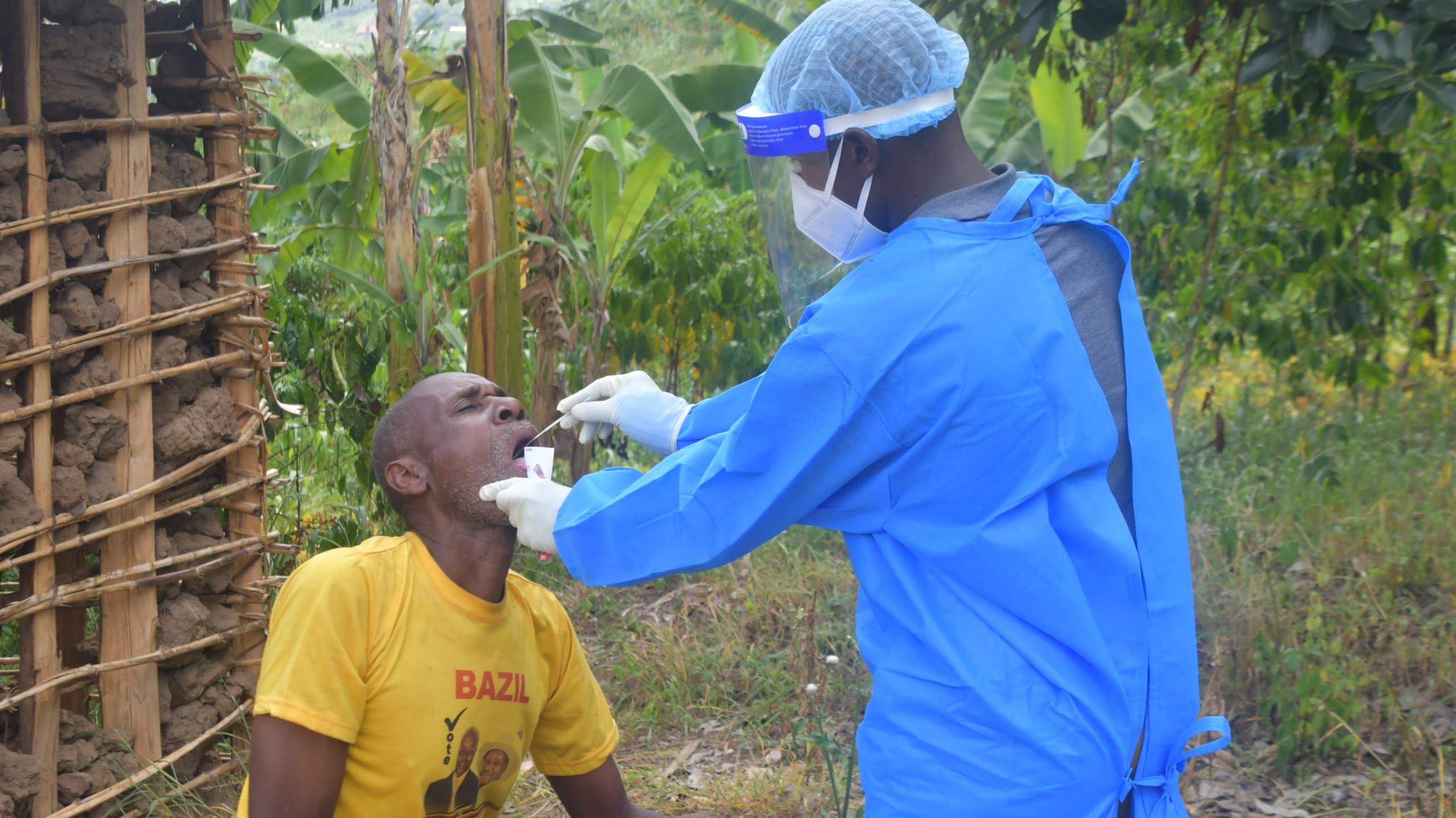
In addition to the Mpox response, BFU contributed to the national preparedness for Sudan Virus Disease (SUDV). Our interventions focused on:
Strengthen coordination at the national and regional levels for Mpox response
Enhance surveillance for early detection and reporting in high-risk populations
Improve risk communication and community engagement (RCCE)
Strengthen surveillance at Points of Entry (POE) for Mpox detection and reporting.
Implementation Regions
Kampala Metropolitan (5 divisions)
Mukono
Rwenzori Region (2 districts)
Hoima Region (7 districts)
Mubende Region (5 districts)
Key Achievements
2,659/500 community resource persons oriented on Mpox messaging
23 community dialogue meetings conducted
1,188 school sensitization events conducted
373,639 persons reached in the communities with Mpox messaging
396 District Rapid Response Team members oriented (152% of target)
896 health facilities supported through IPC and Mpox training (224% of target)
50,000 IEC materials distributed across districts
989 schools sensitized (99% of target)
200 Trainers of Trainers oriented from 16 refugee-hosting districts (133% of target)
1,965 Village Health Teams (VHTs) trained (79% of target)
7 community engagement meetings conducted (64% of target)
32 Sub-County taskforces activated (40% of target)
16 community dialogues conducted (16% of target)
643 schools from 7 of 9 districts sensitized (64% of target)
Baylor Foundation Uganda remains committed to strengthening Uganda’s public health emergency response and building resilient health systems nationwide.